
The Re-Awakening of Systems Engineering in the Age of AI
Key Takeaways
- Collaborative Specification: We are moving from "spec-then-code" to an iterative feedback loop where AI helps refine the requirements before implementation.
- Alignment over Precision: "Prompt Engineering" is about understanding failure modes and ensuring the model's vast capabilities align with your specific constraints.
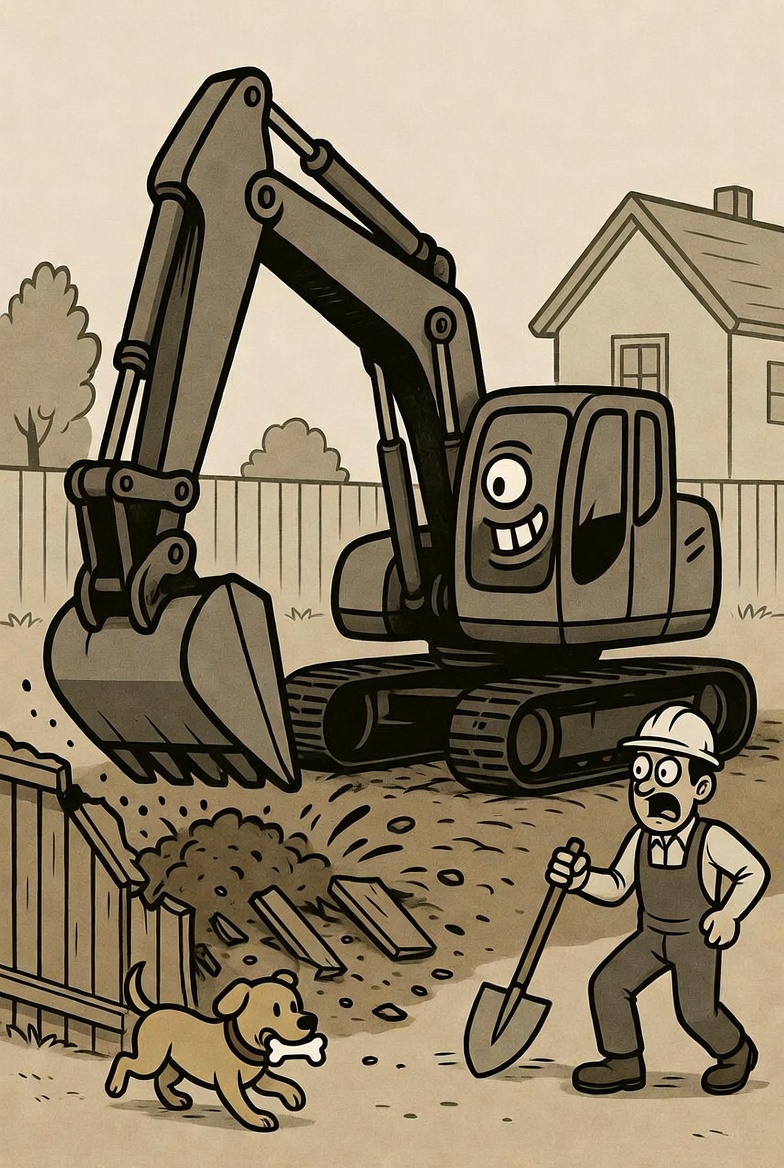
- The Excavator Analogy: AI is a high-capacity excavator. It is powerful and capable, but without a disciplined site foreman (you) setting the guardrails, it can be confidently wrong.
For nearly two decades, the software industry has prioritized speed and flexibility, often at the expense of architectural intent. We embraced the Agile manifesto, chanting "working software over comprehensive documentation" as if it were a shield against rigor. In doing so, we often lost the art of precision—the ability to clearly define -what- we are building before we start building it. We are re-learning a fundamental truth: the quality of the result is inextricably linked to the quality of the definition. If we provide a fuzzy map, even the most powerful engine will lead us astray.
But the pendulum is swinging back. Ironically, the very thing that was supposed to automate us out of existence - Artificial Intelligence - is inviting us to revisit the forgotten wisdom of disciplined specification.
AI's Love Language is Clarity
We often talk about "Prompt Engineering" as if it's a new mystic art. At its core, it shares DNA with specification writing, but with a critical twist. It isn't just about writing a static document; it's about understanding the model's failure modes and structuring a conversation iteratively. LLMs are the world's most talented interns: they lack the tribal knowledge to see your "obvious" requirements and the experience to question your "bad" ones. They are not pedantic; they are overly compliant. They will happily hallucinate a solution that looks plausible but drives your architecture off a cliff.
Clarity and context are the love language of AI. The more precise and descriptive you are, the better the output. The skills of defining system boundaries, specifying interface control documents (ICDs), and writing rigorous requirements traces are not administrative overhead. They are the keys to aligning the model's vast capabilities with your specific constraints.
The New Agile: Collaborative Specification
In this new era, "Agile" doesn't mean skipping specs. It means:
1. Good Specs (The systems engineering-like principles part)
2. AI Assisted Coding (Teams of AI coding experts)
3. Expert Oversight (The Human in the loop)
This shift redefines Agile itself. It is no longer about manually churning out reams of code; it is about the iterative refinement of clear explanations. We are moving from "spec-then-implement" to Collaborative Specification. We use the AI's broad capability to investigate ambiguity—turning uncertainty into an opportunity to generate multiple architectural options instantly. We probe the AI's interpretation, discover edge cases through conversation, and refine the requirements based on what the model generates. We iterate on the -requirements-, and the AI handles the implementation details. We are no longer managing code complexity; we are managing the clarity of our intent.
Imagine the difference between digging a pool with a shovel and using an automated, high-capacity excavator. For years, we've been digging with shovels (manual coding). We got good at it. We built muscles for it.
AI is the excavator. It allows you to move mountains of earth in seconds. It changes the scale of what is possible for a single engineer. But here is the catch: AIs are not deterministic. They are trained on the chaos of the internet. They are brilliant, eager, but easily distracted mimics.
If you aren't careful, that high-capacity excavator won't just dig your pool. It will pivot 90 degrees, take out your neighbor’s fence, accidentally bury the dog, and then park itself proudly at the bottom of the hole it just dug, waiting for praise.
Guiding the High-Speed Savant
To keep this powerful machine on track, you must apply discipline. We aren't just talking about abstract "requirements." We are talking about Standardized System Prompts, RAG-based Architecture Repositories, and defined Context Windows. You need to create a clear set of guardrails and feed them to the AI.
Think of the AI as a high-speed savant. It can infer reasonable interpretations of ambiguous requirements, but "reasonable" isn't always "right." It doesn't know your style, your security constraints, or your architectural vision unless you explicitly codify them. The challenge isn't that the AI is incapable; it's that it is often confident and slightly wrong. By feeding your design standards and code review checklists into the model's context, you transform the AI from a chaotic generator into a disciplined junior engineer that aligns perfectly with your constraints.
The Role of the Expert
This is why the Systems Engineer is back. You don't need to be the one lifting every shovel of dirt anymore. But you absolutely need to be the site foreman who knows exactly where the hole goes, how deep it should be, and where the plumbing lines are buried.
The AI acts as a highly skilled, yet possibly misguided, engineer. It has infinite knowledge but zero wisdom. It needs a handler. It needs someone who understands the system architecture deeply enough to look at the generated code and say, "That compiles, but it violates our security model."
I am not suggesting we ditch the hard-earned gains of Agile and modern development techniques. Flexibility and speed remain vital. But if you are fortunate enough to know these structured practices and principles, then now is a good time to bring them back to the surface. Combining the velocity of modern engineering with the discipline of systems engineering-like principles is how we truly master this new era.
At Pairti, we aren't just writing prompts; we are rebuilding the scaffolding of intent. The excavator is running—let’s make sure we’re digging in the right place.